Systematic programs to understand Vedanta philosophy and transform your life
Choose from our comprehensive range of study programs designed for different levels of understanding
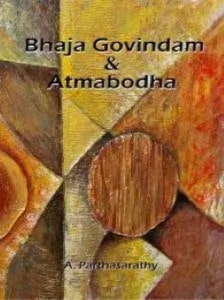
Bhaja Govindam contains thirty – one verses. It was composed by the philosopher-saint Adi Shankaracharya, popularly known as Shankara. Shankara was born in 788 A.D. in Kaladi, a village in the west coast of India.
Early in life he took to sannyasa, celibacy and renunciation. He died at the age of thirty – two.
The Bhaja Govindam highlights the two human motivations – acquisition and enjoyment. Its thirty-one verses point out the delusion in external pursuit and urges one to seek the supreme Self.
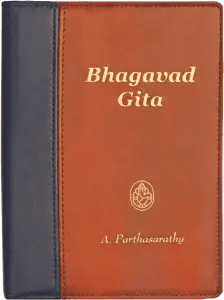
The Gita brings to light the positive and negative tendencies that lie within you. They are your higher aspirations and lower desires in life that affect your evolution or devolution. Its chaste philosophy helps you conquer desire and regain the supreme Self. The state of Godhood. The book comprises the text, transliteration, word-meaning, translation and commentary. A useful contribution is the topic-wise division of each chapter which helps you capture the thought-flow and message therein.
The Bhagavad Gita literally means ‘Song of the Lord’. The text begins with the word dharma and ends with the word mama. ‘Mama’ means ‘my’ and ‘dharma’, ‘essential Being’. Together they mean ‘my essential Being’. It signifies the theme of the Gita. That the purpose of life is to realise one's essential Being. To discover the supreme Self within. Attain spiritual Enlightenment.
The Gita brings to light the positive and negative tendencies that lie within you. They are your higher aspirations and lower desires in life that affect your evolution or devolution. Its chaste philosophy helps you conquer desire and regain the supreme Self. The state of Godhood. The book comprises the text, transliteration, word-meaning, translation and commentary. A useful contribution is the topic-wise division of each chapter which helps you capture the thought-flow and message therein.
The Bhagavad Gita literally means ‘Song of the Lord’. The text begins with the word dharma and ends with the word mama. ‘Mama’ means ‘my’ and ‘dharma’, ‘essential Being’. Together they mean ‘my essential Being’. It signifies the theme of the Gita. That the purpose of life is to realise one's essential Being. To discover the supreme Self within. Attain spiritual Enlightenment.
The Gita brings to light the positive and negative tendencies that lie within you. They are your higher aspirations and lower desires in life that affect your evolution or devolution. Its chaste philosophy helps you conquer desire and regain the supreme Self. The state of Godhood. The book comprises the text, transliteration, word-meaning, translation and commentary. A useful contribution is the topic-wise division of each chapter which helps you capture the thought-flow and message therein.
The Bhagavad Gita literally means ‘Song of the Lord’. The text begins with the word dharma and ends with the word mama. ‘Mama’ means ‘my’ and ‘dharma’, ‘essential Being’. Together they mean ‘my essential Being’. It signifies the theme of the Gita. That the purpose of life is to realise one's essential Being. To discover the supreme Self within. Attain spiritual Enlightenment.
The Gita brings to light the positive and negative tendencies that lie within you. They are your higher aspirations and lower desires in life that affect your evolution or devolution. Its chaste philosophy helps you conquer desire and regain the supreme Self. The state of Godhood. The book comprises the text, transliteration, word-meaning, translation and commentary. A useful contribution is the topic-wise division of each chapter which helps you capture the thought-flow and message therein.
The Bhagavad Gita literally means ‘Song of the Lord’. The text begins with the word dharma and ends with the word mama. ‘Mama’ means ‘my’ and ‘dharma’, ‘essential Being’. Together they mean ‘my essential Being’. It signifies the theme of the Gita. That the purpose of life is to realise one's essential Being. To discover the supreme Self within. Attain spiritual Enlightenment.

Vedanta Treatise expounds the ancient philosophy of Vedanta. It presents the eternal principles of life and living. Living is a technique that needs to be learnt and practised by one and all. The technique provides the formula for remaining active all through life while maintaining inner peace. It helps one develop a powerful intellect to meet the challenges of the world. Above all, the Treatise helps one evolve spiritually. It provides the knowledge and guidance to reach the ultimate in human perfection. The goal of Self-realisation.
Bhaja Govindam contains thirty – one verses. It was composed by the philosopher-saint Adi Shankaracharya, popularly known as Shankara. Shankara was born in 788 A.D. in Kaladi, a village in the west coast of India.
Early in life he took to sannyasa, celibacy and renunciation. He died at the age of thirty – two.
The Bhaja Govindam highlights the two human motivations – acquisition and enjoyment. Its thirty-one verses point out the delusion in external pursuit and urges one to seek the supreme Self.

All problems in business and relationships arise from neglecting the intellect and letting emotions dominate actions. The intellect—reason, judgement, and thinking—should guide the mind, which is driven by feelings and impulses. When intellect leads, actions are mature and effective; when emotions lead, chaos follows. Society neglects intellectual development, causing failure in families, organizations, and nations. Developing the intellect—both gross (for worldly management) and subtle (for self-realisation)—is essential for effective living and ultimate mastery over life.
The Gita brings to light the positive and negative tendencies that lie within you. They are your higher aspirations and lower desires in life that affect your evolution or devolution. Its chaste philosophy helps you conquer desire and regain the supreme Self. The state of Godhood. The book comprises the text, transliteration, word-meaning, translation and commentary. A useful contribution is the topic-wise division of each chapter which helps you capture the thought-flow and message therein.
The Bhagavad Gita literally means ‘Song of the Lord’. The text begins with the word dharma and ends with the word mama. ‘Mama’ means ‘my’ and ‘dharma’, ‘essential Being’. Together they mean ‘my essential Being’. It signifies the theme of the Gita. That the purpose of life is to realise one's essential Being. To discover the supreme Self within. Attain spiritual Enlightenment.
The human psyche is so composed that most of us, including atheists, at some point of time ask fundamental questions of life. It may begin with 'Why did this happen to me?' Then it goes on to 'Is there God? Who am I? What is the goal of human life? What happens when one dies? Why was the world created? By whom? & How?' In Tattvabodha, Sri Adi Sankaracharya lovingly answers these and many more such questions and introduces the aspiring student to the basic principles of Vedanta - the science of Life. This preliminary text is presented in the form of a dialogue between the Guru and the disciple. The disciple asks with genuine eagerness and the Guru answers with patience, with depth and with precision. Swami Tejomayananda's commentary on this text is illuminating and answers even unasked doubts of the beginner. His exposition from what it takes to be a seeker to what it takes to make a saint of oneself is masterly.

The human brain has a severe paucity of certain critical faculties such as reason, thought and judgement. The inability to think clearly and justifiably has rendered the human brain a waste. The author says that the educational systems prevalent today leave no scope for the student to develop his or her intellect. The system is such that the student is only encouraged to gain more and more knowledge and intelligence without honing his or her understanding of it. Everywhere in the world, there is intelligence with no intellect. This loss of this important factor has led to various anomalies such as depression, stress and disease. Other dangerous effects are militancy, vandalism and terrorism. To counter this problem, the book says, humans now need to restructure themselves and re-establish their lost intellect.
Unlock the timeless teachings of the Bhagavad Gita and explore its relevance in modern life. Dive deep into the spiritual wisdom imparted by Lord Krishna to Arjuna on the battlefield of Kurukshetra. Classes will be taken by Lakshminarayanji, a senior disciple of Swami Parthasarathy.
Systematic study of ancient texts
Interactive discussions and Q&A
Practical application to daily life
Supportive learning community
Expert guidance from experienced faculty
Flexible online and in-person options
Join our next batch and start your transformation today
Register for Classes